
ÇAPRAZ BLOK: 2026
ÇAPRAZ BLOK: 2026
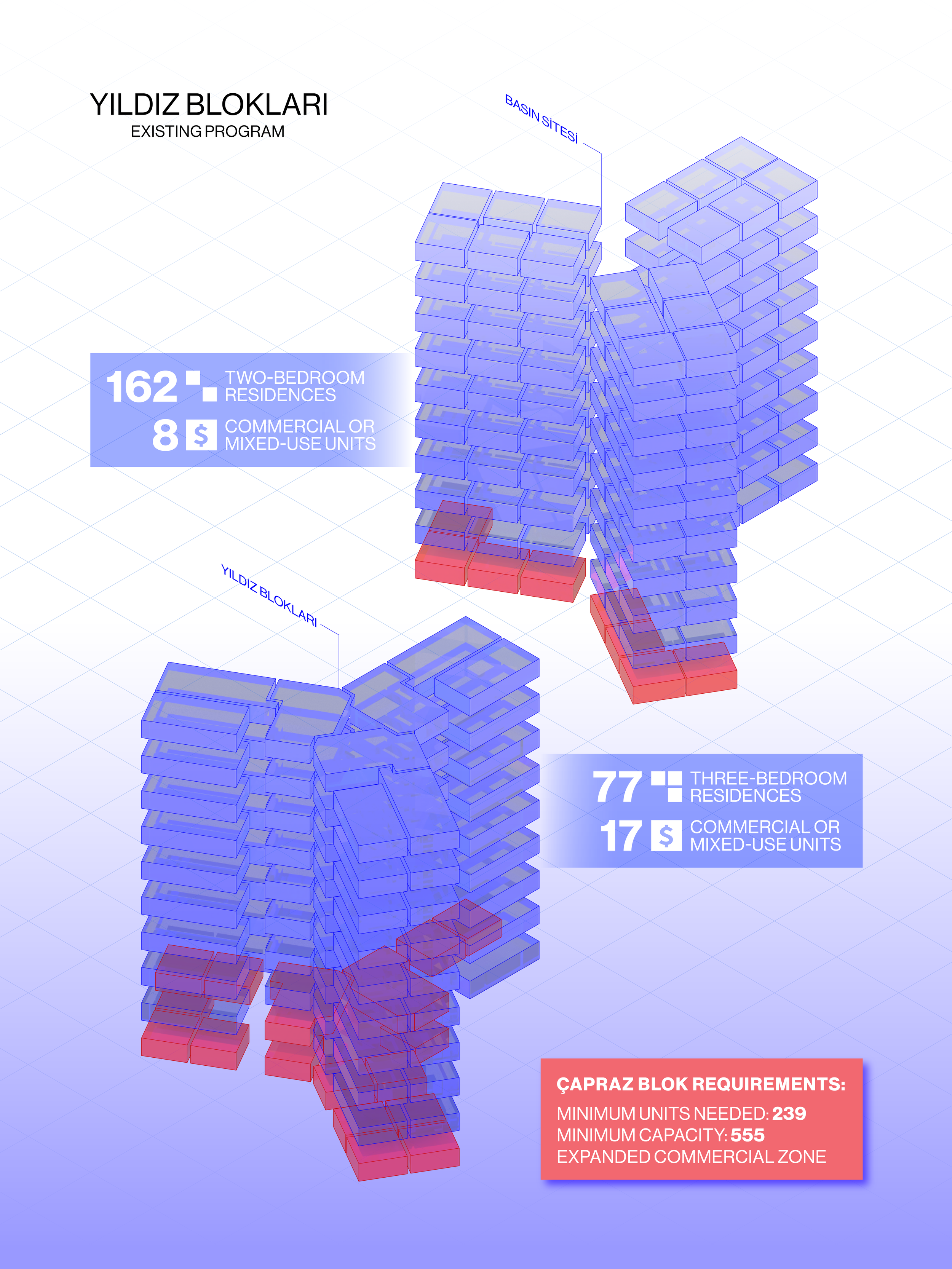
In 2024, an employee of Taşyapı, a corrupt construction company with links to the Justice and Development Party (AKP), purchased apartment #25 in Yıldız Blok I, a large residential building in Etiler, Istanbul, built in 1967. This purchase enabled Taşyapı to indirectly demand that a core sample (karot testi) be taken of the building’s concrete, knowing that the building would no longer meet the structural requirements of the Beşiktaş municipality. Even before receiving the results, Taşyapı presented a proposal to the boards of the three structures within Yıldız Blokları, intending to buy the land, displace the current residents, and convert the entire block into a commercial campus, leveraging their connections to the AKP municipal administration.
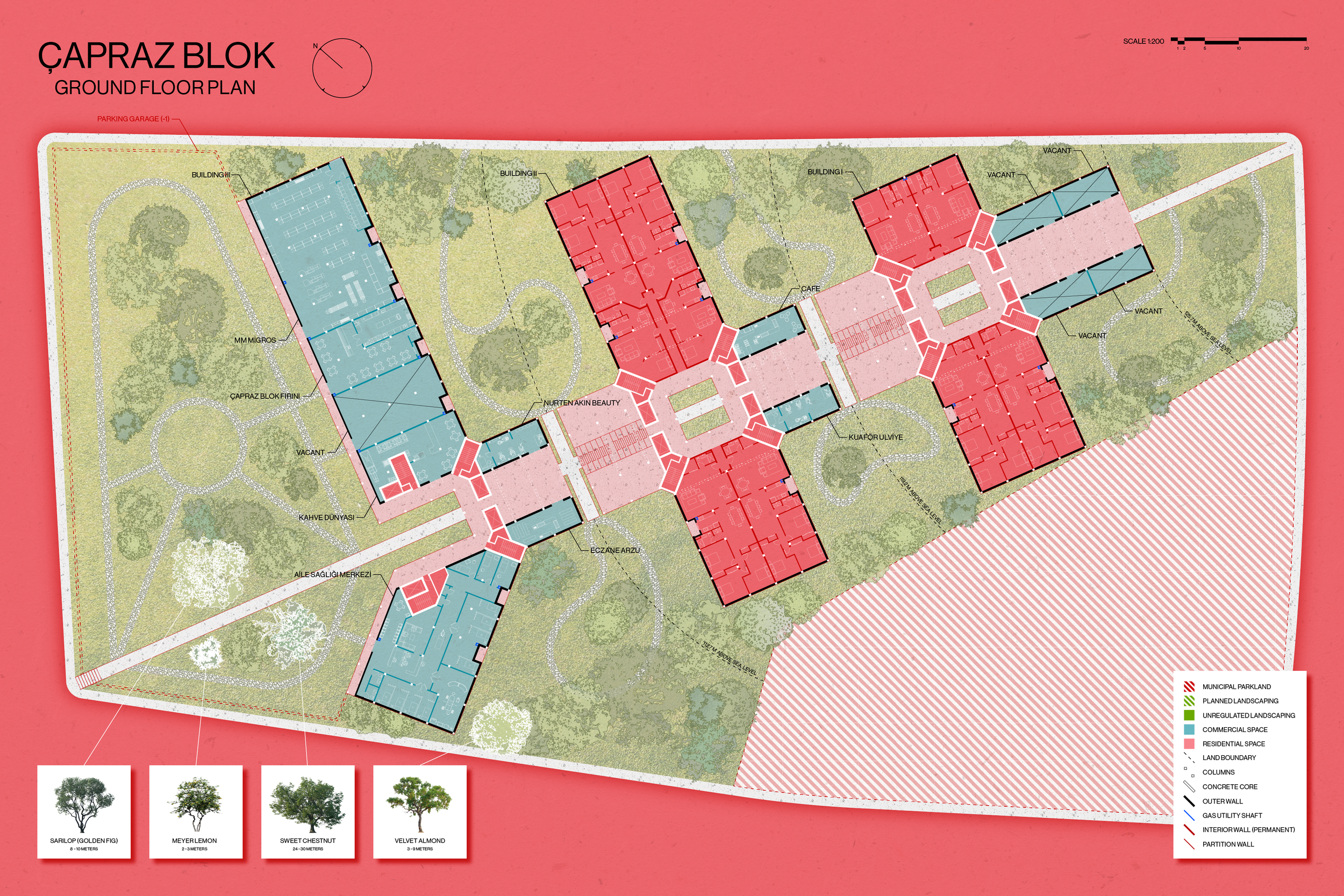
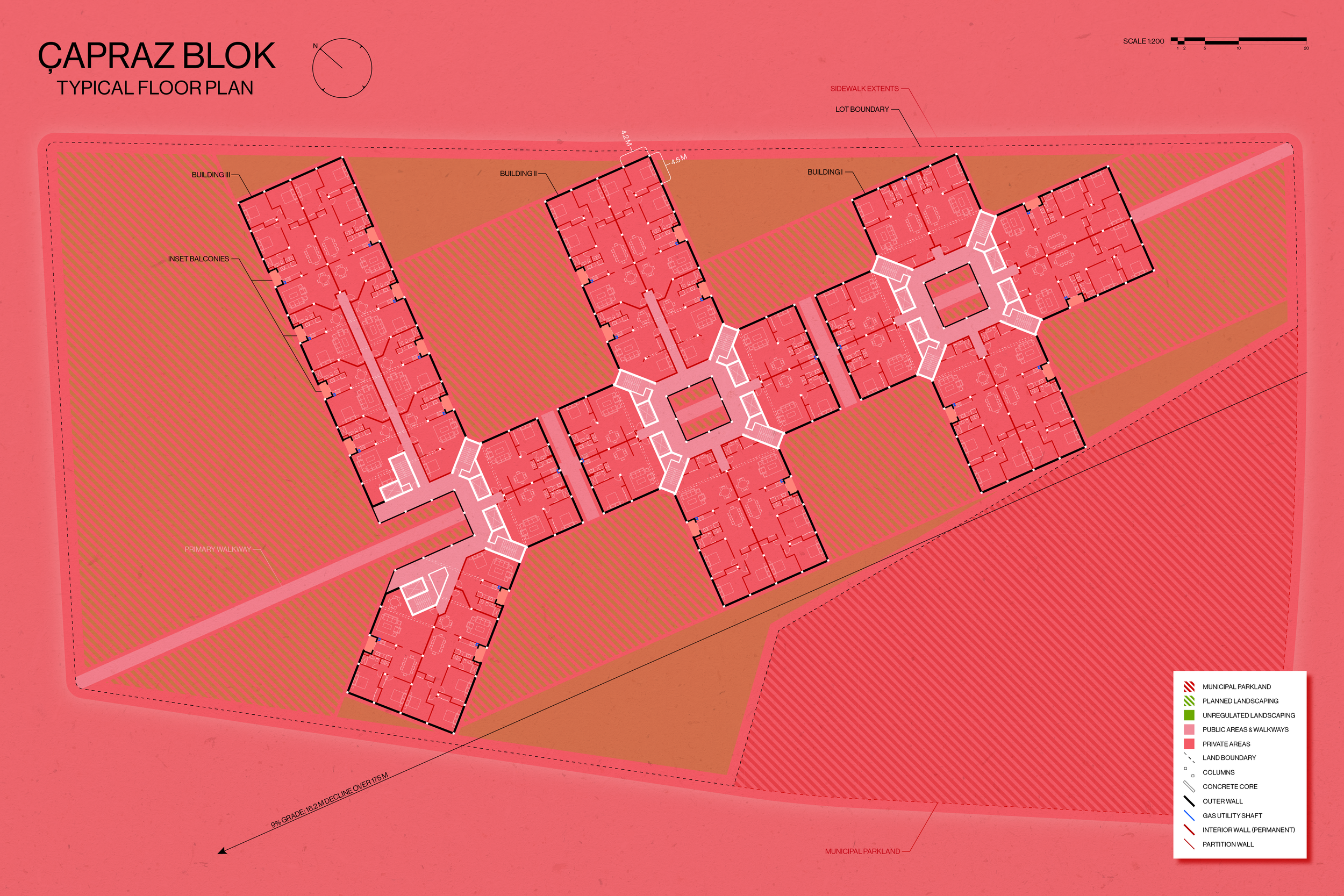
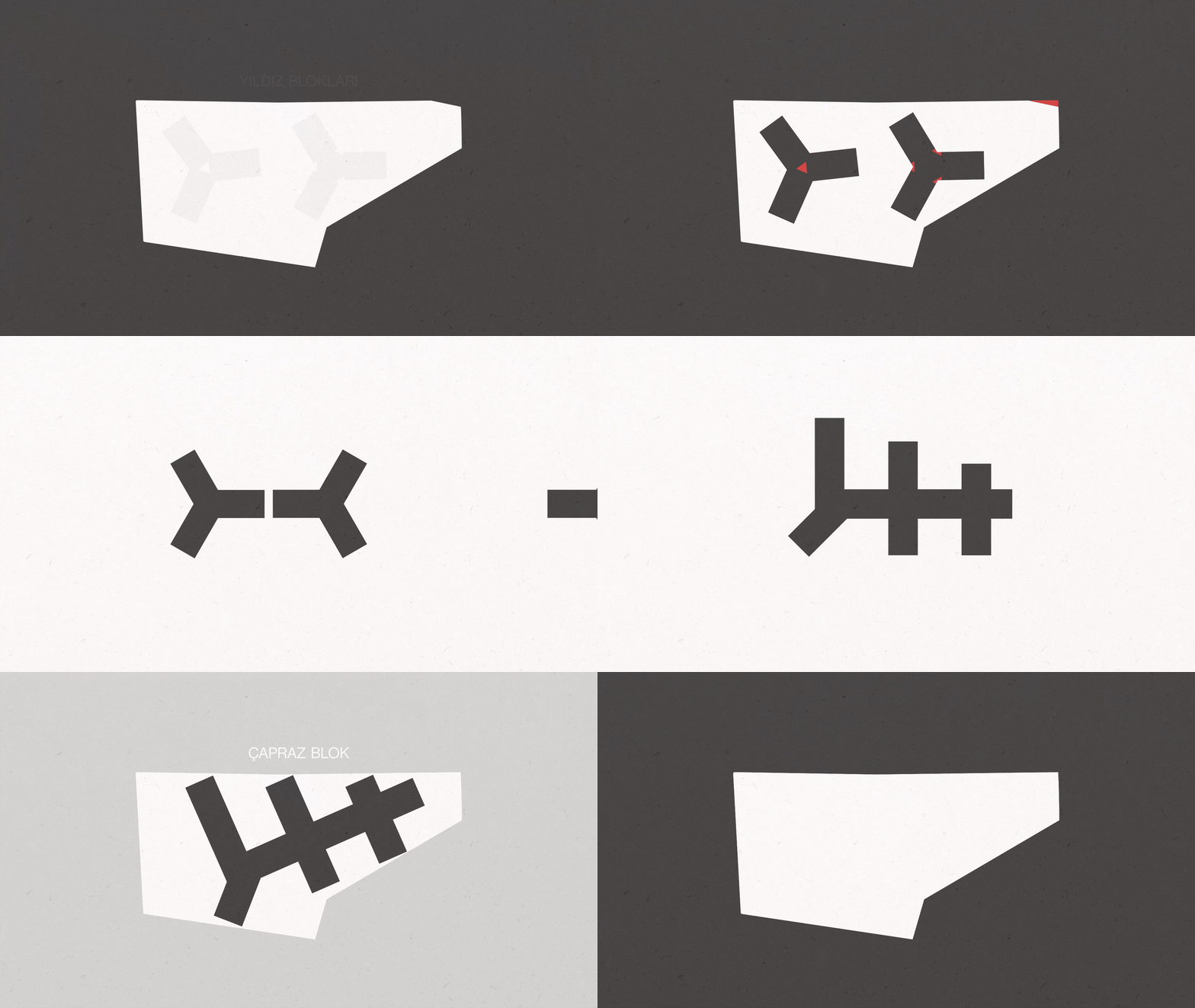
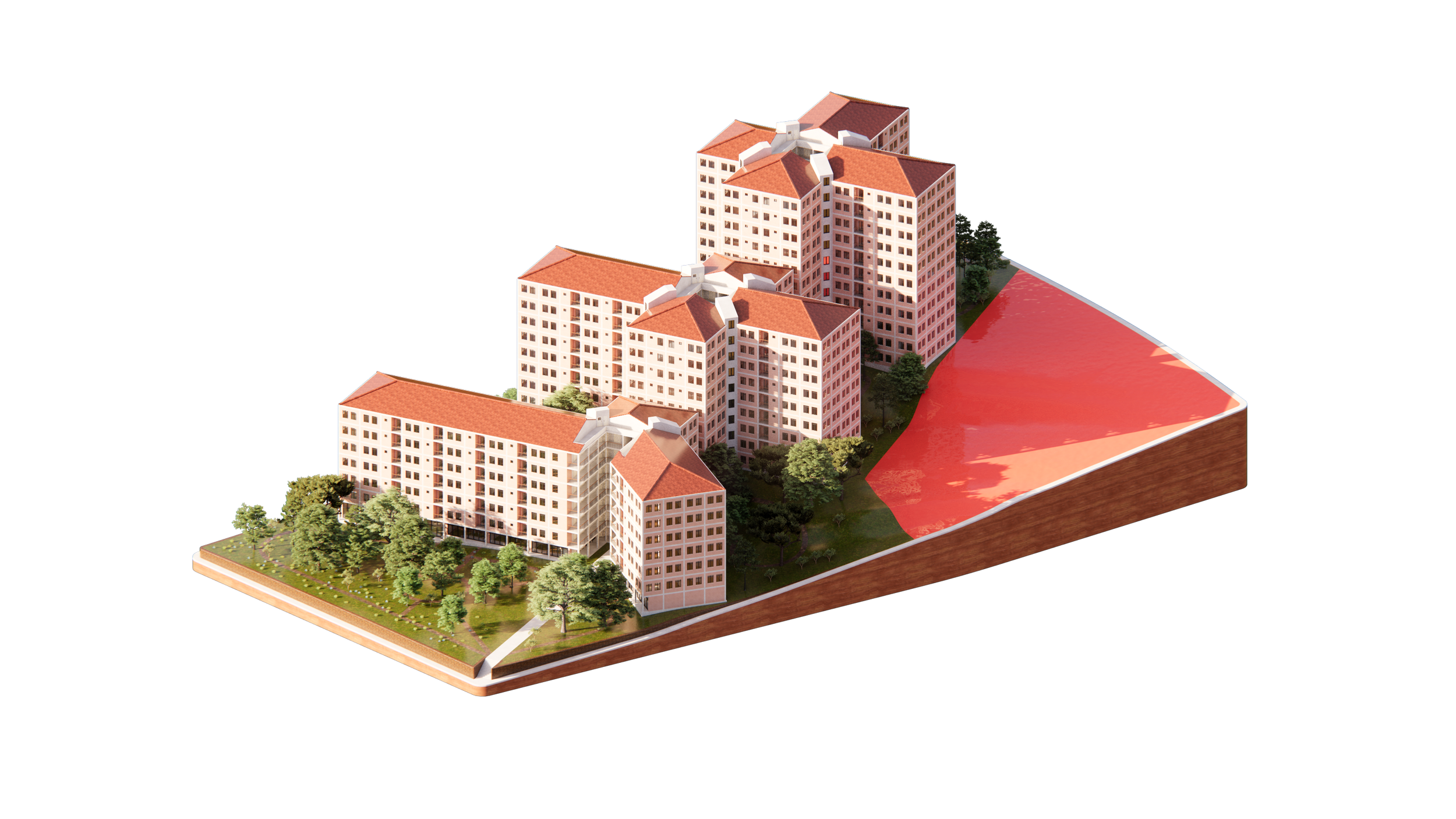
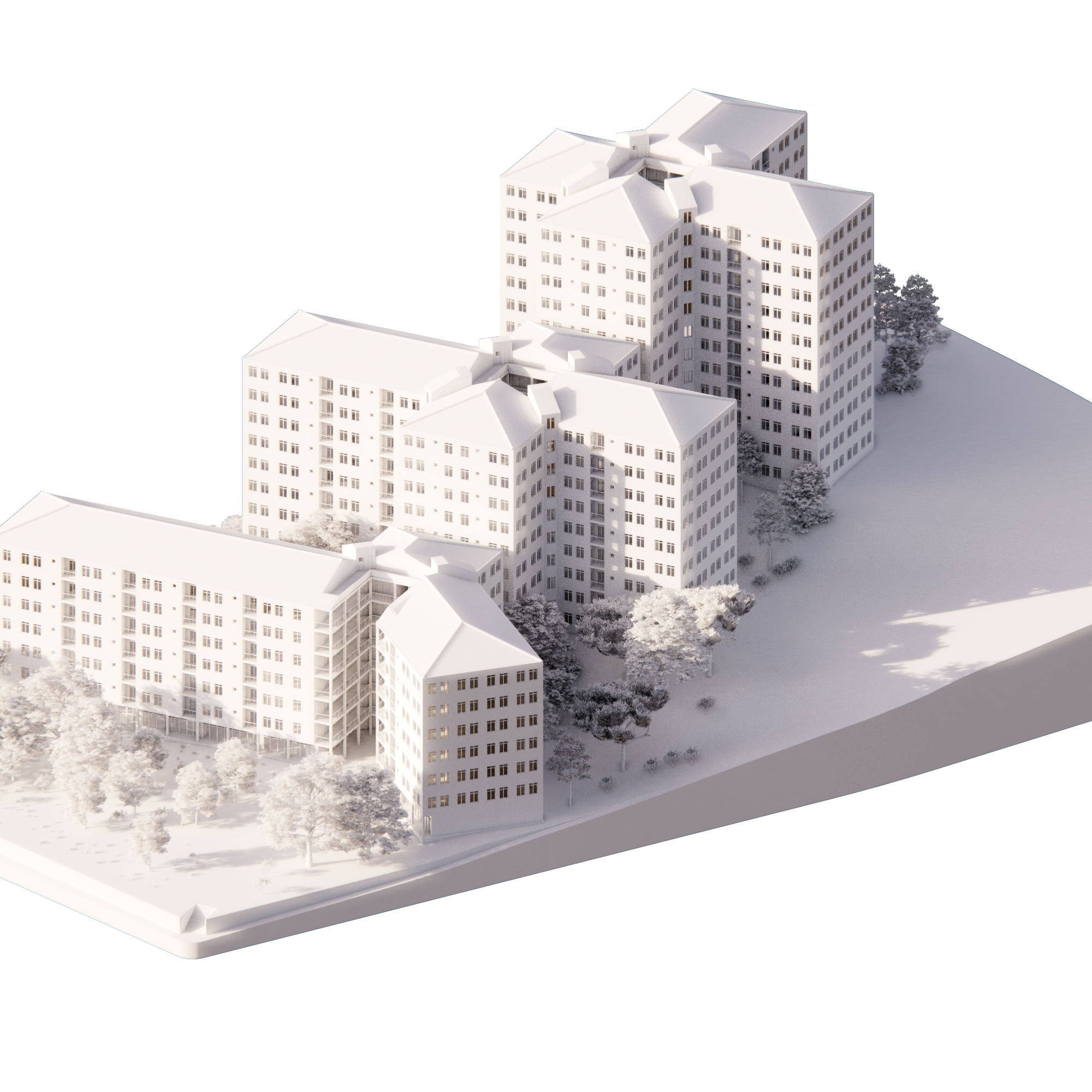
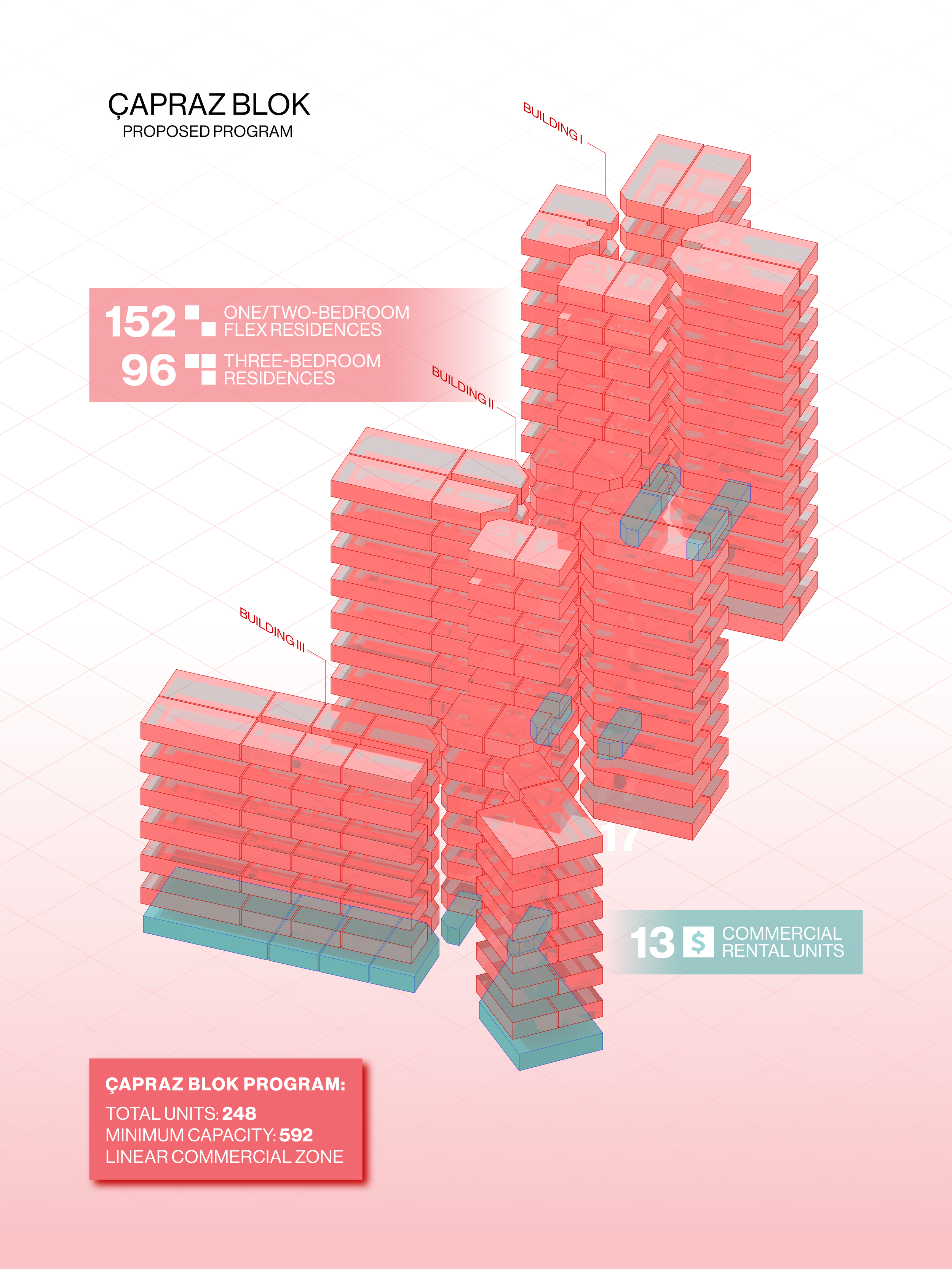
In response, the boards of the three blocks agreed to send a private Request for Proposal (RFP) to various architecture and construction firms, including Global İnşaat, Bostancı Stüdyo, and Denge Group, to develop plans for a new mixed-use residential complex. This would comply with the municipality’s mandate to demolish the current structures, while also rejecting Taşyapı’s displacement plan and maintaining the residents’ control over their land. Çapraz Blok is a response to this RFP.
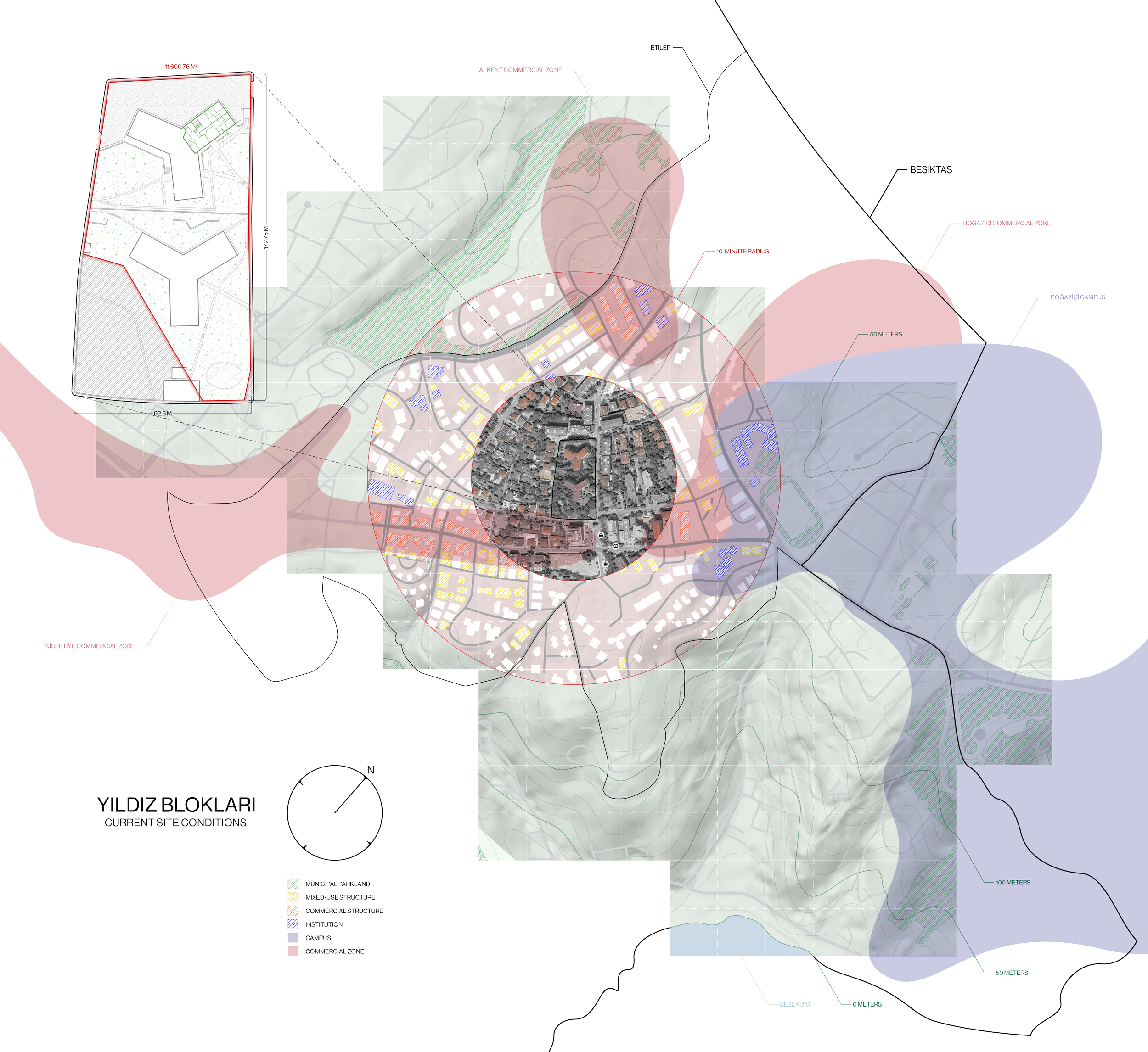
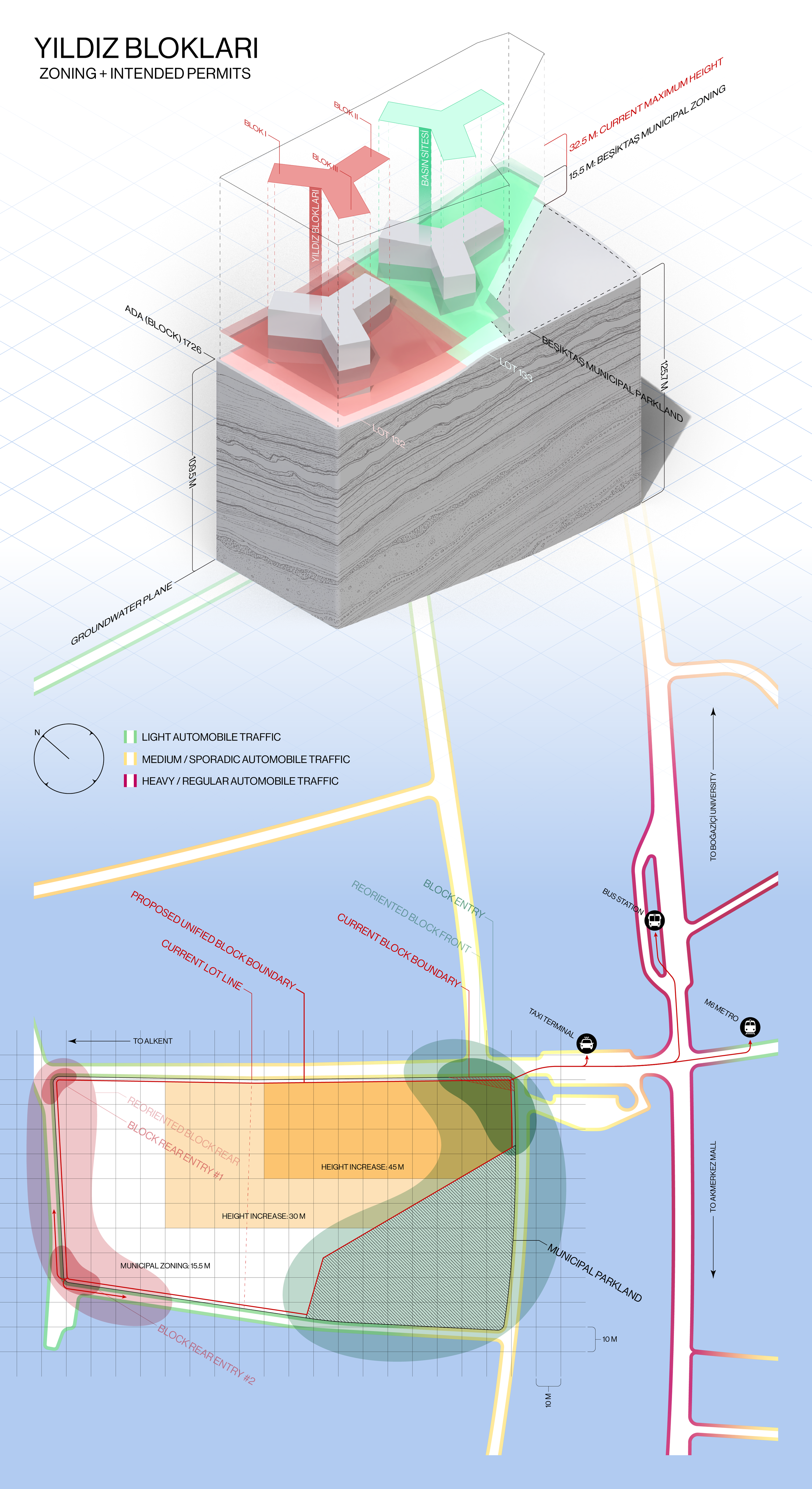
Sandwiched between several commercial zones, commuting distance from Boğaziçi University, and surrounded by an affluent community, Çapraz Blok must resist the neighborhood trend of over-development, respond to the material needs of the current residents, and maintain Ada 1726 as a pocket of the historic Etiler community beside the business and dining hub of Nespetiye. In addition, Çapraz Blok should respect the neighborhood's overall low height.
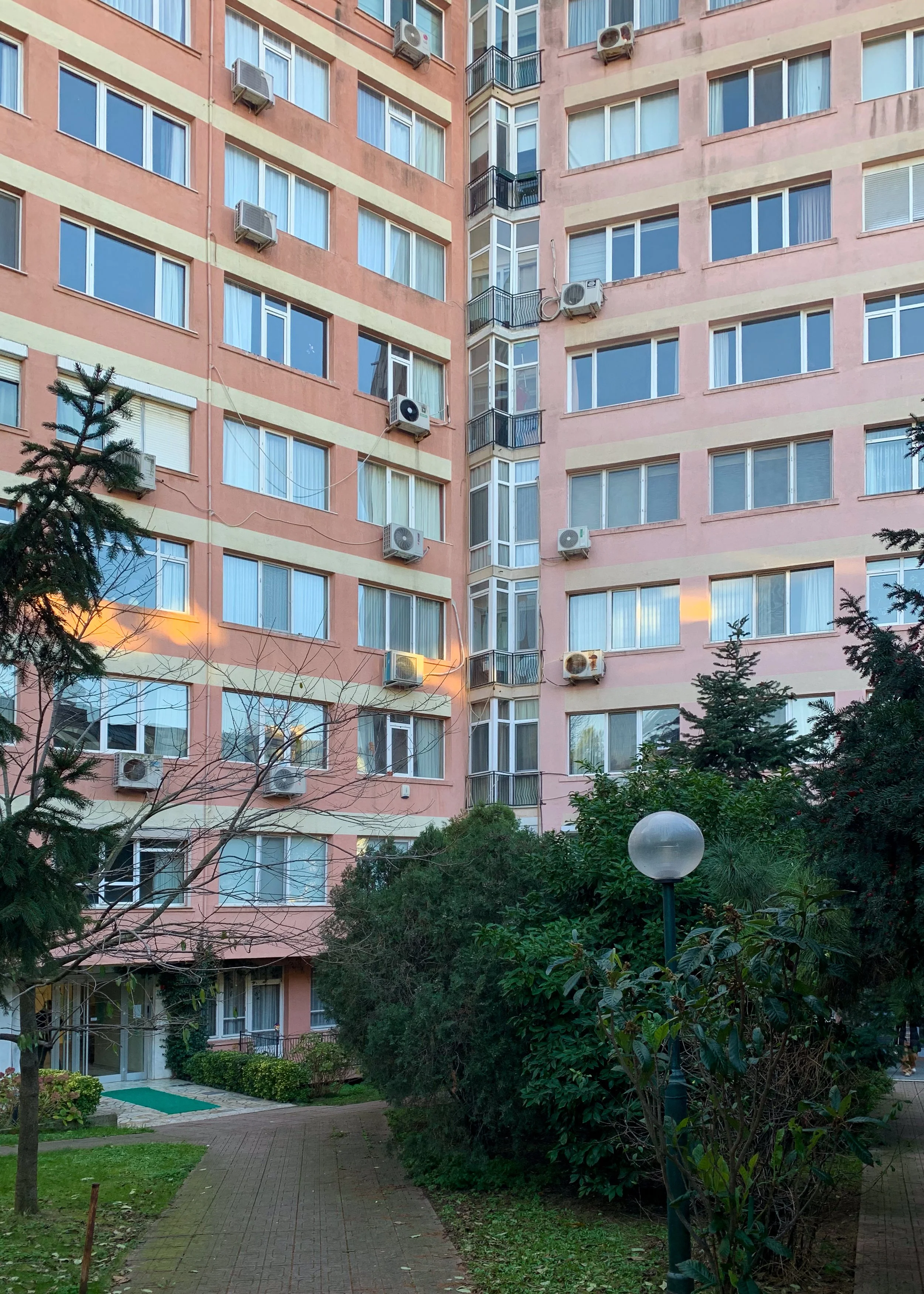
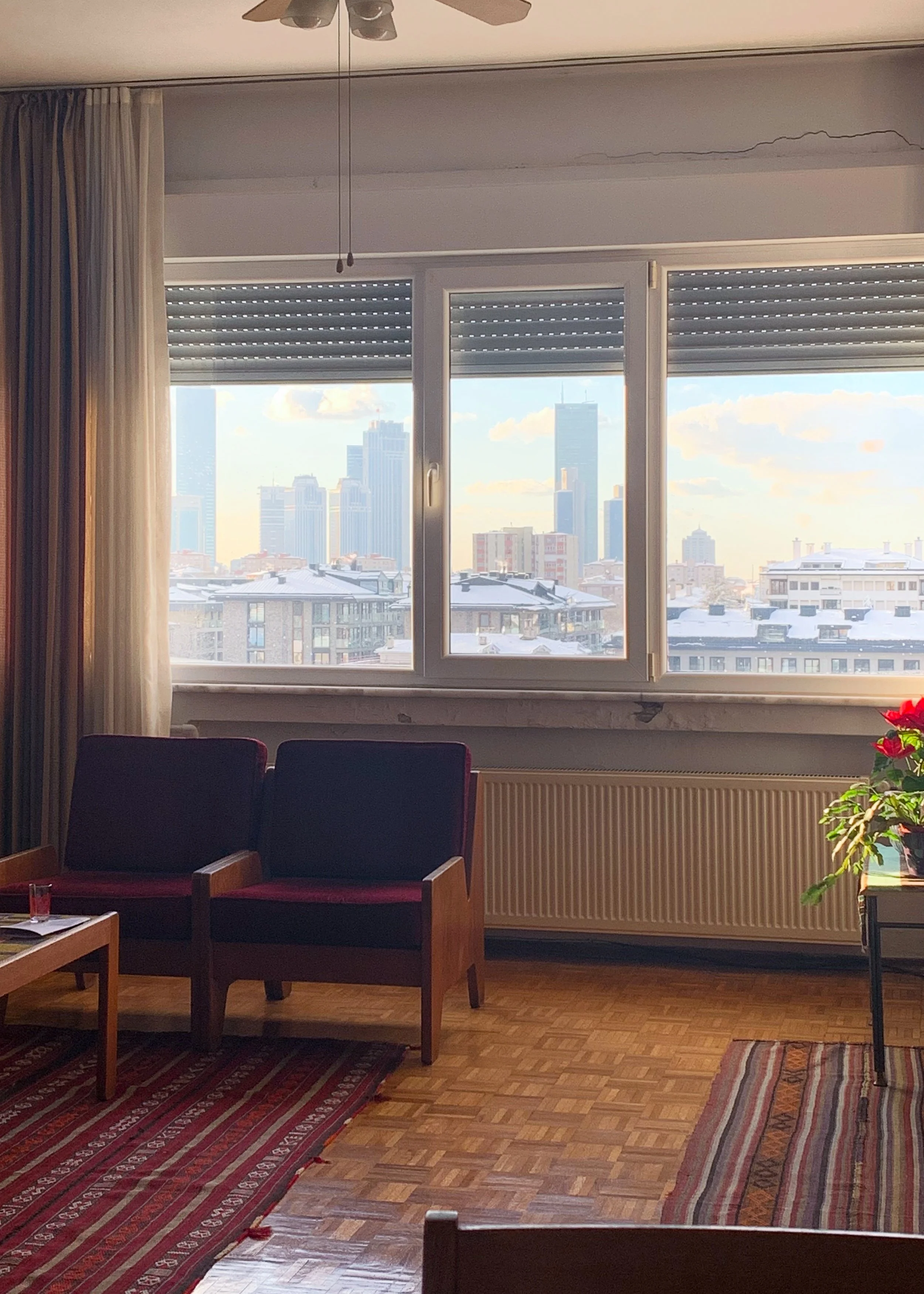
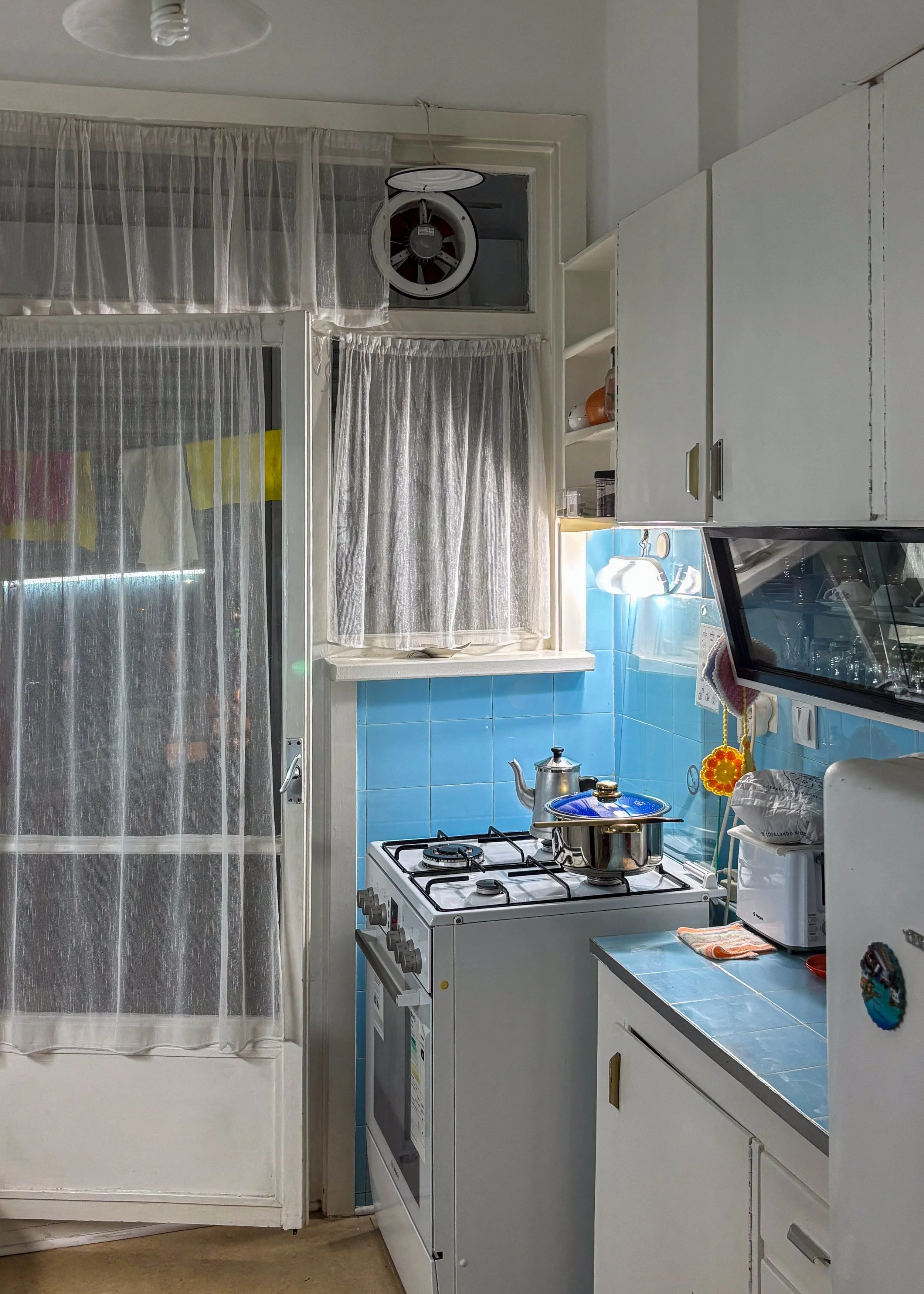
Çapraz Blok is also a personal project. My grandfather, Neşet Günal, was one of the original residents of Blok I. Along with my grandmother, Olcay Günal, who still lives in apartment #27, my grandfather was searching for an inexpensive apartment to house his family and his painting studio after being appointed as a lecturer at the Istanbul State Academy of Fine Arts. Tatyos Ajderhanyan, an Armenian general contractor who partially designed and engineered Yıldız Blokları and its sister structure, Basın Sitesi, waived the down payment for the apartment after learning Neşet was an artist. My grandfather even offered to sell his motorcycle to pay for the apartment, but Tatyos refused.
My grandfather and grandmother moved into Yıldız Blok I in July of 1967. Not even a month later, on the 22nd of July, the Mudurnu Valley earthquake struck Istanbul, destroying 5,200 homes and killing 86. They called Tatyos, worried that the building was destabilized; however, he explained that the tri-volume designs of Yıldız Blokları and Basın Sitesi are designed for each wing to shift independently and support the other two, allowing the building to withstand significant seismic activity without relying on a steel structure or complex engineering. The building’s concrete structure and simple engineering have now been weaponized by Taşyapı and the AKP to justify its demolition.